
Understanding Braces & Clear Aligners
An inspiring, comforting guide to clear aligners and modern aesthetic braces: How gentle biomechanics straighten teeth comfortably at any age without metallic clutter.
Many adults and teens believe the misconception that straightening crooked teeth requires years of bulky, painful metal 'train track' braces. In modern orthodontics, clear aligner technology and aesthetic ceramic brackets have revolutionized the journey to a straighter smile.
Orthodontic movement is not about pulling teeth aggressively; it is a gentle biological dialogue between steady micro-forces and your jawbone. Custom medical-grade clear aligners apply calibrated pressure to gently remodel the microscopic bone around tooth roots, gliding teeth millimeters at a time into harmonious alignment. The aligners are virtually invisible, completely removable for meals and brushing, and fit effortlessly into active lifestyles.
How Teeth Move Safely Through Living Bone
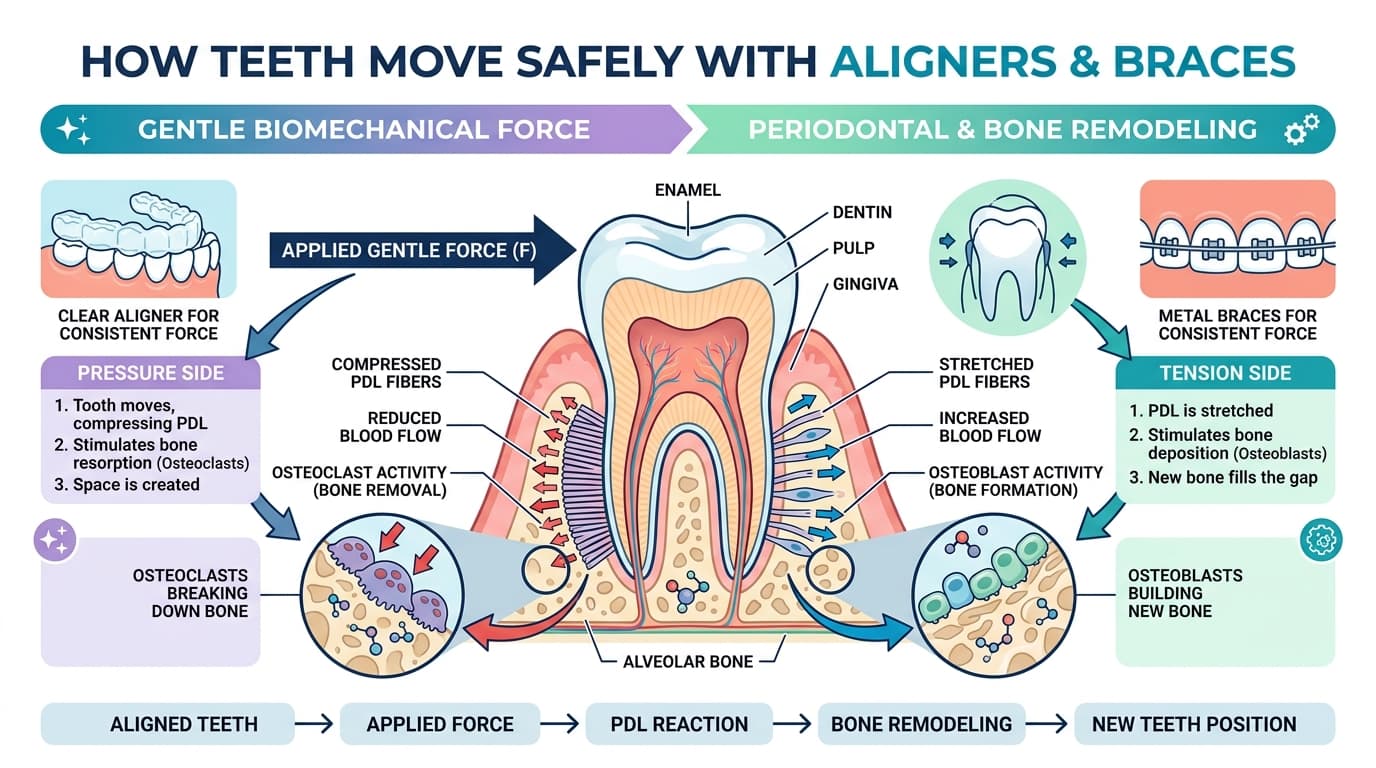
Figure 1: The biological science of orthodontic movement: Gentle, consistent pressure (F) gently compresses periodontal ligament fibers on the pressure side, prompting natural bone resorption, while new bone cells rebuild on the tension side to anchor the tooth in its ideal position.
Periodontal Ligament (PDL) Cushion
Biomechanical SensorThe microscopic hammock of fibers suspending the tooth in the jawbone. When calibrated aligner force is applied, PDL cells signal natural bone remodeling without damaging tooth roots.
Osteoclasts (Bone Remodelers)
Pressure Side AdaptationSpecialized bone cells that gently resorb microscopic bone in the direction the tooth is moving, creating a smooth path for realignment.
Osteoblasts (Bone Builders)
Tension Side StabilizersBone-forming cells that deposit fresh, strong mineralized bone behind the moving tooth to lock it securely into its new, aligned foundation.
SmartTrack Clear Polymer
Invisible Force TransferCustom multi-layer transparent plastic engineered to exert continuous, gentle biological forces rather than sharp spikes in pressure, ensuring superior comfort.
When Is It Time to See a Doctor?
Orthodontic treatment isn't just about appearance — misaligned teeth create hidden oral health obstacles. You should consider an evaluation if you experience:
Teeth Crowding & Overlapping
When jaws lack space, teeth twist and overlap. Overcrowded crevices trap plaque and calculus, significantly increasing your risk of gum disease and cavities.
Noticeable Gaps or Spacing (Diastema)
Gaps allow food to impact delicate gum papillae during chewing, causing chronic localized gum inflammation and aesthetic hesitation when smiling.
Deep Overbite or Protruding Front Teeth
Excessive vertical or horizontal overlap causes premature wear on front tooth edges and can strain the temporomandibular jaw joint (TMJ).
Crossbite or Uneven Chewing Contacts
Causes asymmetric jaw growth in teens, facial imbalance, and uneven wear on back molar chewing surfaces over the years.
Self-Conscious Smile in Photographs
Confidence matters in professional and personal life. Modern clear aligners straighten teeth discreetly without anyone noticing you are wearing them.
Why Align Crooked or Crowded Teeth?
Straightening teeth is far more than a cosmetic choice. An aligned dental arch creates biological harmony, effortless hygiene, and protects your jaw joint.
Biomechanical advantages of proper orthodontic alignment:
- Straight, uniformly spaced teeth are effortless to brush and floss, drastically cutting cavity risk
- Evenly distributes chewing forces across all 32 teeth, preventing premature enamel fractures
- Eliminates abnormal bite wear patterns and relieves temporomandibular joint (TMJ) strain
- Discreet, removable clear aligners allow you to eat freely with zero dietary restrictions
Chronic consequences of untreated orthodontic malocclusion:
- Overlapping tight crevices act as permanent tartar traps, leading to severe gum disease
- Misaligned bite forces cause chipped enamel edges and premature flattening of chewing cusps
- Deep crossbites and overbites trigger chronic jaw muscle headaches and neck tension
- Self-consciousness can cause habitual mouth-covering and lower social confidence
Delaying orthodontic alignment allows crowded teeth to accumulate subgingival tartar, frequently leading to irreversible gum recession and bone loss around tilted roots.
What Happens During the Procedure?
Your journey to an aligned smile is completely digital, predictable, and transparent from day one:
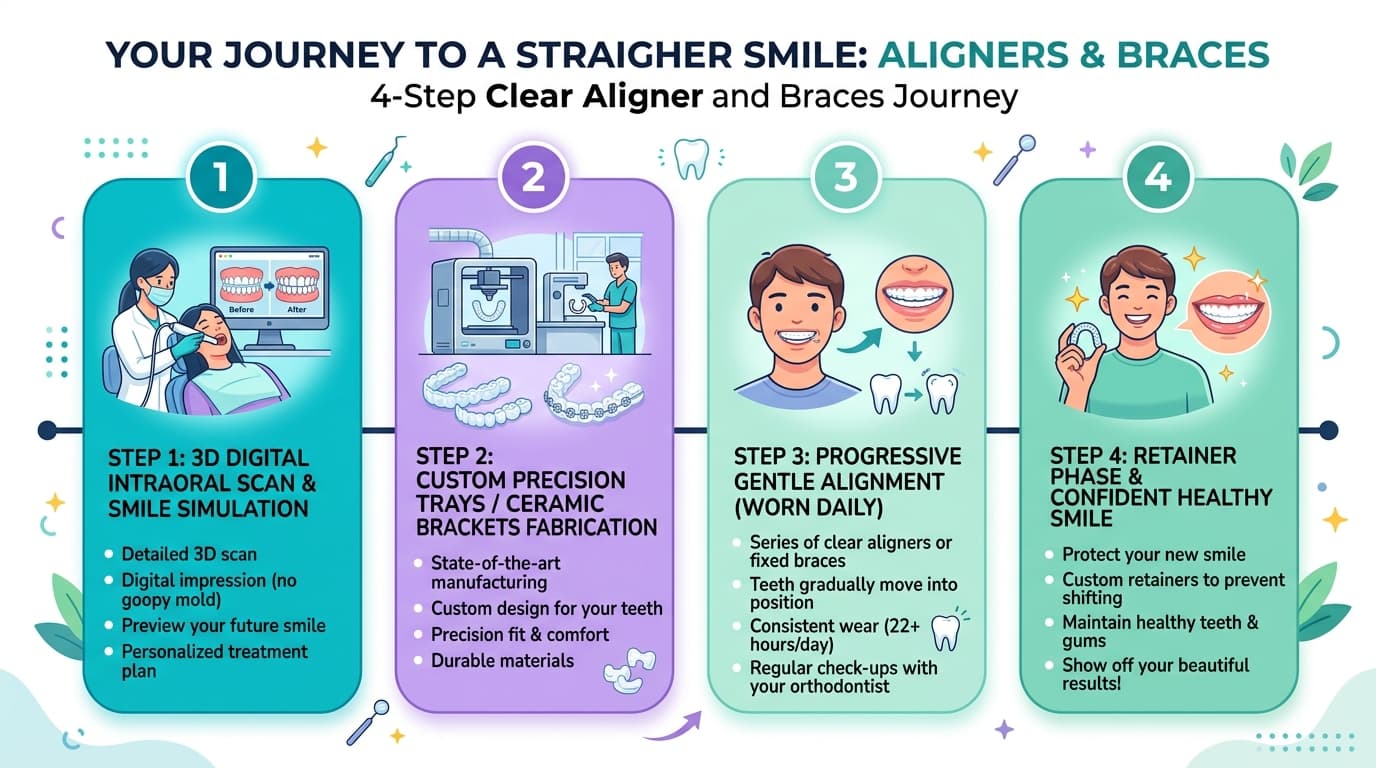
Figure 2: The 4 stages of your smile alignment journey: 3D intraoral digital scan and smile simulation, custom precision aligner/bracket fabrication, progressive gentle movement with daily wear, and the retention phase for lifelong stability.
3D Digital Scan & Smile Simulation
A handheld optical wand glides over your teeth. Zero goopy impression trays or gagging.
We capture a high-precision 3D digital model of your mouth and map out your tooth movement trajectory on screen, showing you your future smile in minutes.
Custom Precision Trays Fabrication
Anticipation! Your custom series of medical-grade aligners is precision 3D-printed.
Specialized clear aligners are milled and trimmed to your exact gumline with microscopic accuracy for seamless comfort and optimal retention.
Progressive Daily Alignment Wear
A snug, comforting hug on your teeth when inserting a new tray, fading to normalcy in 24 hours.
You wear each transparent tray for 20–22 hours daily, switching to the next numbered tray every 7–10 days. Teeth gradually glide into place.
Retainer Phase & Confident Smile Reveal
Immense satisfaction! Smooth, perfectly aligned teeth that feel and look sensational.
Once alignment is complete, featherweight clear retainers are provided to wear while sleeping, locking your new smile permanently in place.
Orthodontic Systems: Invisible Trays vs Ceramic Braces
Custom Clear Aligners (Invisalign / ClearPath)
Transparent, featherlight polymer trays that can be removed for dining, meetings, and oral hygiene.
Aesthetic Ceramic Braces
Tooth-colored porcelain brackets and tooth-toned wires that blend naturally into your enamel with exceptional mechanical control.
Does It Hurt? The Honest Truth About Pain
The Origin of the Myth
Clear aligners do not cause sharp pain. When you switch to a new set of trays, you will feel a mild sensation of snug pressure for the first 12 to 24 hours as the ligament adapts. By day two, the trays feel like a natural second skin over your teeth.
Our Painless Anesthesia Approach
Orthodontics requires zero needles or numbing. It is an entirely non-invasive, external therapy.
Initial scan is 30 minutes. Quick check-in reviews are 15 minutes.
Zero downtime. You can speak, work, exercise, and socialize immediately. Most full aligner journeys take 6 to 12 months.
Aligner Wear & Daily Care Guidance
Simple guidelines to keep your aligners clean, invisible, and tracking perfectly.
Immediate Priorities for the First 24 Hours
What to Eat Comfortably
- Eat whatever you love! Because aligners are removed for meals, there are ZERO dietary restrictions
- Enjoy crunchy apples, almonds, corn on the cob, and crusty baguettes without fear
- During the first day of a new tray: soft paneer, warm pasta, and smoothies if teeth feel slightly tender
- Drink plenty of pure cool water while wearing your aligners
What to Avoid for Now
- Drinking hot chai or coffee with aligners on (heat can distort clear plastic, and stains can seep inside)
- Drinking sugary sodas or sweetened drinks with aligners on (sugars get trapped against enamel)
- Chewing gum while wearing clear aligners (gum will stick to the polymer)
- Smoking while wearing aligners (nicotine will turn clear trays yellow)
Normal Sensations to Expect
- ✓A sensation of snug tightness for the first 24 hours of a new tray number
- ✓A very slight, temporary lisp during the first 2 days of speaking, which disappears as your tongue adapts
- ✓Teeth feeling slightly flexible when aligners are removed for eating (this is normal bone remodeling)
When to Reach Out to Us
- !An aligner tray cracks or is accidentally lost
- !A small tooth-colored attachment button pops off during eating
- !A rough edge on the tray scratches your tongue (easily smoothed in seconds at the clinic)
A Note from Dr. Pooja
Chief Dental Surgeon
“You are never too old to have the straight, confident smile you've always wanted. Many of our happiest clear aligner patients are working professionals in their 30s, 40s, and 50s who thought they had missed their chance. Our digital scanning makes the process easy, transparent, and exciting from your very first appointment.”