
Understanding Dentures & Bridges
A comforting, practical guide to modern dentures and dental bridges: How lightweight flexible prosthetics and fixed porcelain bridges restore full chewing power without surgery.
When multiple teeth are missing, everyday joys like eating favorite foods or speaking effortlessly can become fraught with hesitation. Many people worry that the only alternatives are expensive surgical implants or uncomfortable, heavy pink plastic dentures that slip out of place.
Modern restorative dentistry offers comfortable, elegant non-surgical options. Today's flexible dentures are crafted from featherweight, biocompatible nylon resins that flex with your mouth's natural movements, eliminating painful metal clasps. For localized gaps, fixed porcelain bridges bond seamlessly onto adjacent teeth to provide permanent, non-removable chewing stability. Both options are fast, non-invasive, and beautifully customized to match your facial profile.
Structural Architecture of Bridges & Dentures
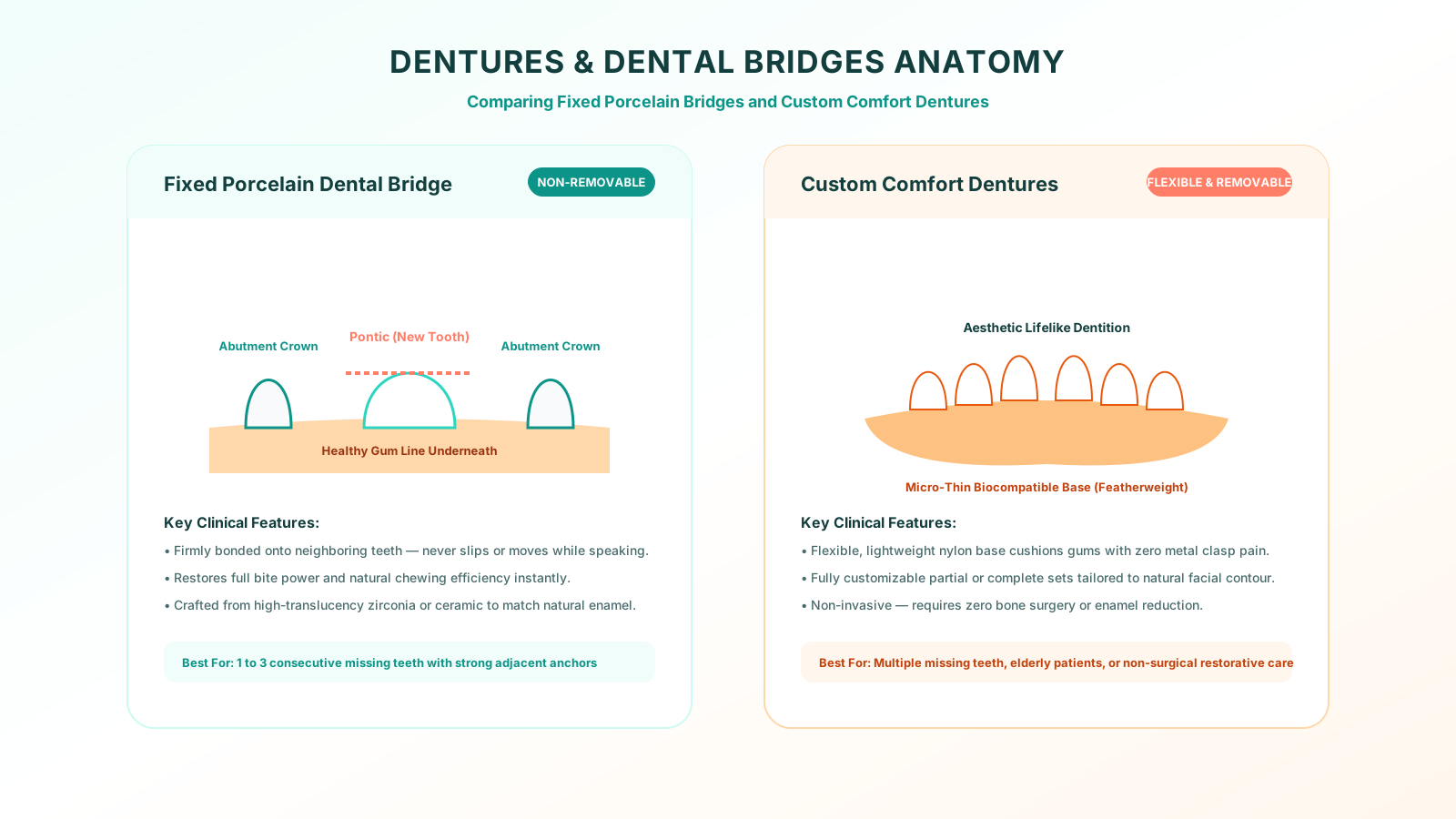
Figure 1: Comparing restorative tooth replacement: Fixed bridges utilize adjacent crowned teeth to suspend a lifelike replacement tooth (pontic) permanently, while flexible dentures utilize lightweight biocompatible resin to cushion gums comfortably without metal clasps.
Abutment Crowns (Bridge)
Structural AnchorsPrecision ceramic crowns bonded onto the natural teeth on either side of a gap. They distribute chewing forces evenly without straining individual teeth.
Pontic Tooth (Bridge)
Suspended ReplacementA sculpted, high-strength porcelain tooth that rests lightly on the gumline, filling the empty space with 100% natural appearance and chewing power.
Flexible Valplast Nylon Base (Denture)
Comfort CushionUnlike brittle hard acrylic, flexible nylon conforms gently to the oral mucosa, eliminating sore pressure spots and resisting accidental drops.
Facial Tissue Support
Youthful ArchitectureRestoring missing back teeth restores vertical dimension, preventing the sunken cheeks and thin lips that make faces appear prematurely aged.
When Is It Time to See a Doctor?
Tooth loss gradually changes your jaw mechanics. You will benefit from a denture or bridge evaluation if you notice:
Difficulty Chewing Rotis, Nuts, or Salads
Missing back molars forces you to chew on front teeth, which are not designed for crushing forces, leading to severe enamel chipping and indigestion.
Teeth Tilting or Collapsing into a Gap
Teeth naturally drift toward empty spaces. A bridge or partial denture holds adjacent teeth firmly in their correct anatomical alignment.
Speech Changes or Slight Whistling
Missing front or side teeth allows air to escape awkwardly while speaking. Restoring tooth contours instantly restores clear phonetics.
Old Dentures Slipping or Causing Gum Sores
As jawbones naturally remodel over the years, old acrylic dentures lose their suction. A modern reline or flexible remake restores snug stability.
Seeking a Fast, Non-Surgical Solution
Dentures and bridges require zero surgery, offering complete smile restoration within 3 to 7 days.
Why Replace Missing Teeth Promptly?
Dentures and bridges offer immediate restoration of chewing function, natural facial fullness, and clear speech at an accessible investment.
Immediate benefits of modern bridges and flexible dentures:
- Restores full chewing power so you can enjoy wholesome foods and avoid indigestion
- Prevents adjacent teeth from tilting or collapsing into the empty spaces
- Restores natural lip support and cheek fullness, reversing a sunken facial appearance
- Fast, non-surgical turnaround: Custom-milled and fitted in just 3 to 5 days
Progressive structural consequences of untreated dental gaps:
- Neighboring teeth drift and tilt into gaps, severely destabilizing your entire bite
- Opposing teeth over-erupt into the void, leading to root sensitivity and decay
- Missing back molars overload front teeth, causing premature enamel fractures
- Jawbone resorbs over time, resulting in premature facial aging and collapsed lips
Leaving missing teeth unreplaced allows adjacent teeth to tilt so severely into the gap that placing a bridge or implant later becomes impossible without preliminary orthodontic uprighting.
What Happens During the Procedure?
Restoring your smile with a bridge or custom denture is gentle, clean, and completed in just a couple of brief appointments:
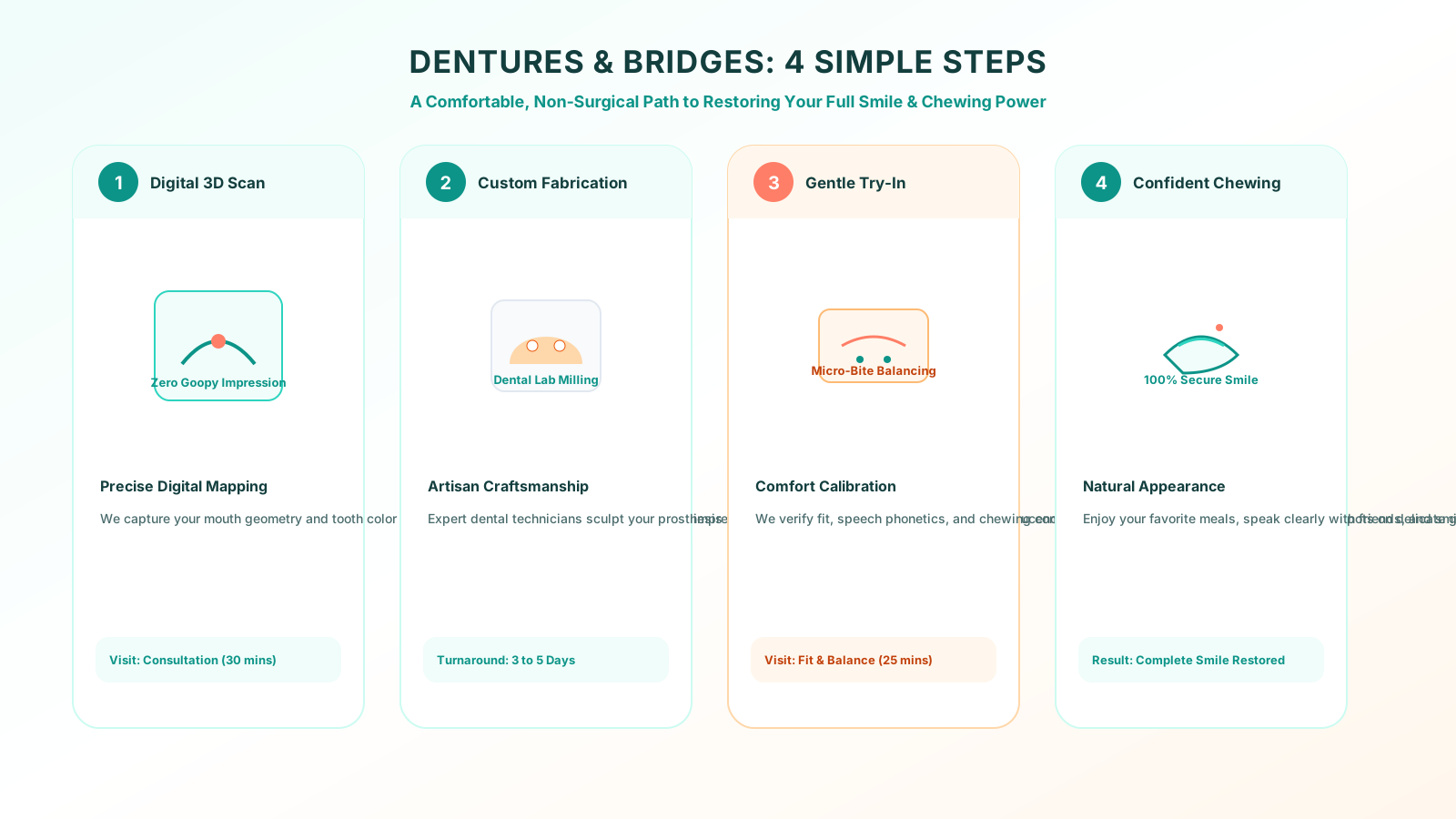
Figure 2: The 4 gentle steps of denture & bridge restoration: Digital 3D scanning, precision laboratory fabrication, gentle try-in and bite balancing, and restored confident chewing.
Digital 3D Scan & Aesthetic Planning
Completely relaxing. A quick digital camera scan with zero goopy paste.
We scan your teeth and gums, evaluate your bite relationships, and select tooth shapes and shades that harmonize with your face.
Precision Custom Fabrication
Relaxing at home while master dental ceramists hand-sculpt your prosthesis.
Our specialist lab crafts your flexible denture or zirconia bridge with multi-layer tooth translucency and gum-matched aesthetics.
Gentle Try-In & Micro-Bite Balancing
Exciting! Testing your new teeth, checking how they feel, look, and speak.
We verify the fit against your gums, check chewing contacts with articulating paper, and make micro-adjustments to eliminate any high spots.
Final Delivery & Chewing Restoration
Instant confidence! Full, secure chewing power and a complete natural smile.
For bridges, we bond the prosthesis permanently with light-cured resin. For dentures, we provide practical homecare tips and insertion training.
Restoration Options: Fixed Bridge vs Flexible Denture
Fixed Zirconia / Ceramic Dental Bridge
Permanent, non-removable ceramic replacement that feels and cleans like natural teeth.
Modern Flexible Partial / Complete Denture
Featherweight, flexible nylon prosthesis that hugs gums securely without metal clasps.
Does It Hurt? The Honest Truth About Pain
The Origin of the Myth
Receiving a bridge or denture involves minimal to zero discomfort. Bridge tooth preparation is performed under gentle local numbing, while denture fitting is completely non-invasive with zero needles. Adapting to chewing with new teeth takes just 3 to 7 days.
Our Painless Anesthesia Approach
Dentures require zero anesthesia. Fixed bridges use gentle localized numbing during conservative tooth shaping.
30 minutes per appointment.
Immediate return to daily activities. Your tongue and gums adapt to the new teeth within a few days.
Prosthetic Care & Daily Maintenance
How to wear, clean, and adapt comfortably to your new bridges or flexible dentures.
Immediate Priorities for the First 24 Hours
What to Eat Comfortably
- Soft, cut-up pieces of food during the initial 3–4 days (paneer, soft rotis, cooked vegetables)
- Chew food slowly on both sides of your mouth simultaneously to distribute pressure evenly
- Nutritious warm soups, scrambled eggs, dhal, and tender steamed rice
- Plenty of water to keep the mouth hydrated and comfortable
What to Avoid for Now
- Extremely sticky sweets, hard toffees, or chewing gum that can tug on dentures
- Biting hard apples directly with front denture teeth — cut them into wedges instead
- Very tough, fibrous meats during the first week of adaptation
- Using toothpicks under fixed bridge margins — use soft interdental brushes instead
Normal Sensations to Expect
- ✓A sensation that the mouth feels full for the first 2 to 3 days (your tongue adapts quickly)
- ✓Slight increase in saliva flow for 24–48 hours as the mouth recognizes the new prosthesis
- ✓A few days of practice to speak with total clarity and effortless speed
When to Reach Out to Us
- !A sore pink spot develops on the gum beneath a denture (a 2-minute minor adjustment fixes this completely)
- !A fixed bridge feels high when biting down on back teeth
- !Any unexpected movement or clicking during speech
A Note from Dr. Pooja
Chief Dental Surgeon
“Losing teeth should never mean losing the ability to enjoy meals with family or smile freely in photos. Modern dental bridges and flexible dentures are remarkably comfortable, natural-looking, and non-invasive. We work closely with you to ensure your new teeth feel completely comfortable and natural from day one.”