Understanding Wisdom Tooth Extraction
A reassuring, patient-centered guide to understanding impacted wisdom teeth, why modern gentle extraction is painless, and how to heal smoothly in just a few days.
Wisdom teeth (third molars) are the last teeth to emerge, usually between the ages of 17 and 25. Because human jaws have evolved to be narrower over thousands of years, most modern jaws simply lack the physical space for four extra large molars. As a result, wisdom teeth frequently become impacted — growing tilted, sideways, or trapped beneath the gumline.
The thought of 'getting a tooth pulled' understandably triggers anxiety. However, modern wisdom tooth removal is a gentle, minimally invasive clinical procedure performed under complete local anesthesia. You feel no pain or sharpness — only light pressure and gentle guidance as the tooth is safely released. Most patients are pleasantly surprised by how swift and seamless the appointment truly is.
Why Space Matters: Impaction & Jaw Nerve
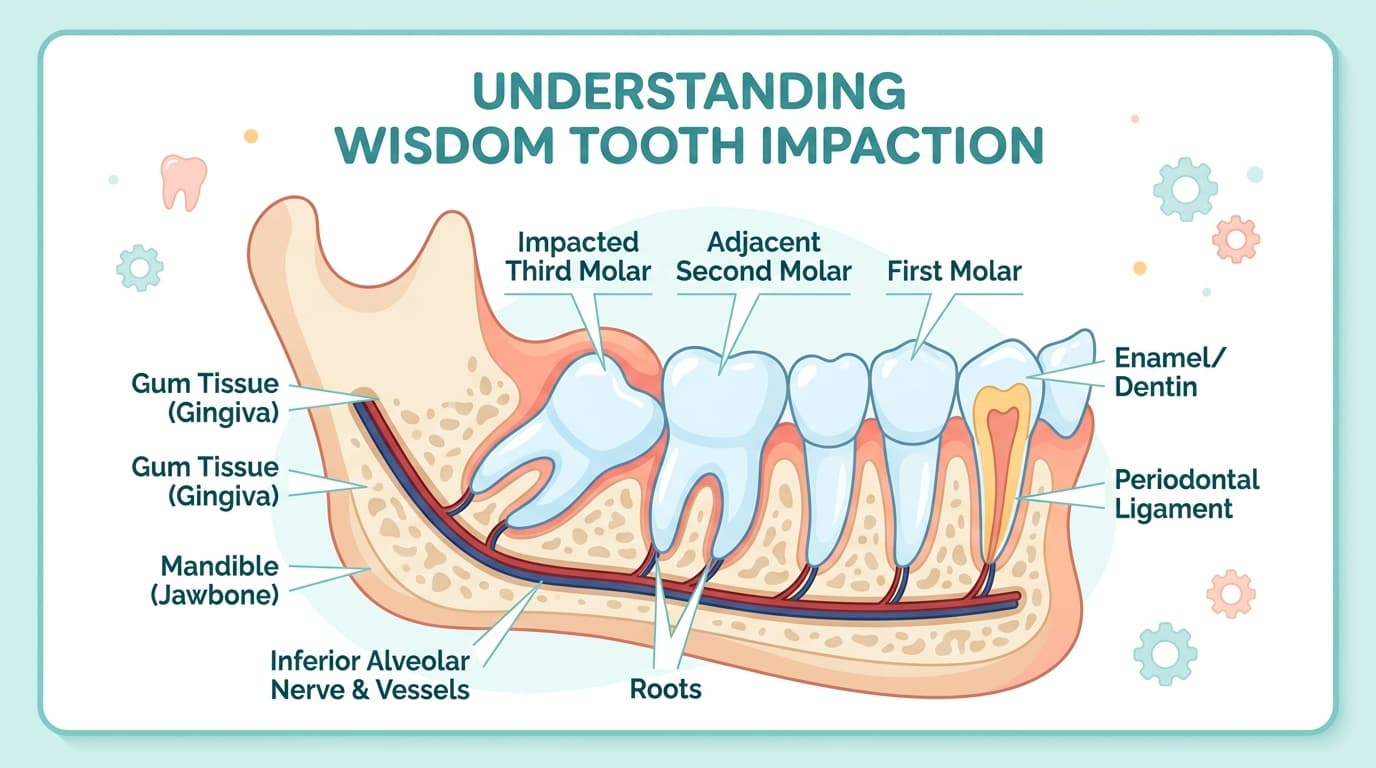
Figure 1: Wisdom tooth impaction anatomy: When a third molar tilts horizontally into the adjacent second molar, it creates a tight food trap, damages neighboring roots, and sits near the lower jaw nerve canal requiring careful radiographic planning.
Impacted Third Molar
Tilted Wisdom ToothOften grows horizontally or mesially against the adjacent tooth. Unable to emerge properly, it creates chronic gum flaps that trap food and bacteria.
Adjacent Second Molar
Key Chewing ToothThe crucial functional molar in front of the wisdom tooth. Impacted pressure can cause invisible root resorption or hidden cavities on this vital tooth.
Pericoronal Gum Flap
Vulnerable TissueThe flap of gum partially covering an erupting tooth. Food debris gets trapped underneath, causing sudden painful swelling known as pericoronitis.
Inferior Alveolar Nerve Canal
Mandibular Nerve ChannelThe main sensory nerve pathway running through the lower jaw. Pre-surgical digital imaging maps the exact distance between roots and nerve for absolute safety.
When Is It Time to See a Doctor?
Impacted teeth often simmer quietly before causing flare-ups. Watch for these physical signs that your third molars require an evaluation:
Swollen, Tender Gum Flap at Back of Jaw
Known clinically as pericoronitis. Bacteria become trapped under the gum flap over a partially erupted tooth, causing localized infection and pain when chewing.
Throbbing Ache Radiating to Ear or Neck
Eruption pressure or root inflammation sends referred sensory pain signals along the jawbone toward the ear and temple.
Difficulty Opening Mouth (Trismus)
Occurs when infection spreads to the surrounding masticatory muscles. Requires prompt clinical disinfection and antibiotic support.
Food Constantly Trapped Behind Back Molar
The tight crevice between an angled wisdom tooth and the adjacent molar cannot be reached by bristles, creating a severe cavity trap.
Crowding or Shifting of Front Teeth
While controversial, erupting wisdom teeth can exert anterior vector pressure or prevent proper orthodontic stability after braces.
Why Remove an Impacted Wisdom Tooth?
Not every wisdom tooth needs to be removed. If a wisdom tooth grows upright, has a healthy opposing tooth, and can be cleaned easily, it can be kept! But when impacted, extraction protects your entire mouth.
Eliminates recurrent infections and safeguards adjacent healthy teeth:
- Protects the vital 2nd molar from devastating root resorption and unfixable deep decay
- Permanently stops recurrent painful pericoronitis infections and cheek swelling
- Fast, smooth recovery when removed early before roots anchor deeply in dense bone
- Performed comfortably under profound localized anesthesia with zero sharp pain
Postponing removal of an impacted third molar creates serious complications:
- Trapped food creates invisible cavities on the adjacent molar root that cannot be filled
- Recurrent bacterial infections can spread into deep facial spaces requiring hospitalization
- Follicular tissues around trapped crowns can form fluid-filled cysts in the jawbone
- Older jawbone is denser, meaning extractions delayed to later decades heal more slowly
Delaying removal of an impacted molar often results in the loss of the perfectly healthy second molar in front of it due to invisible decay at the root junction that cannot be repaired.
What Happens During the Procedure?
Knowing what happens during the visit replaces fear with confidence. Here is our step-by-step gentle extraction protocol:
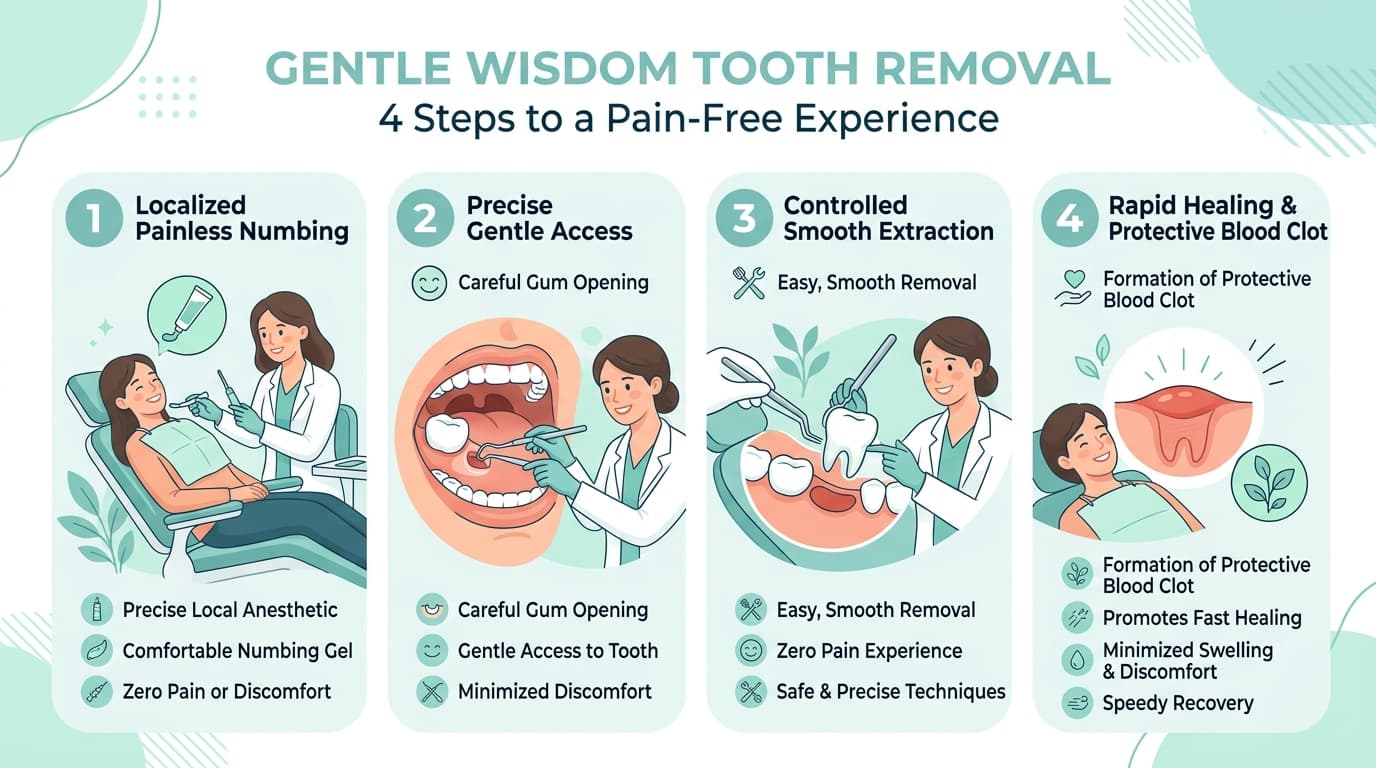
Figure 2: The 4 gentle steps of wisdom tooth removal: Localized painless numbing, precise access, controlled smooth tooth release, and protective blood clot formation for fast healing.
Localized Painless Anesthesia
A pleasant numbing gel followed by localized anesthetic. You test for numbness before anything starts.
We completely anesthetize the tooth, surrounding gum tissue, and jawbone. We verify complete numbness — you feel zero pain.
Precise Gentle Access
Gentle touch. Zero sharpness. You hear soft clinical water spray.
If the tooth is trapped beneath gum tissue, a tiny micro-incision is made to gently expose the crown while preserving healthy tissue.
Controlled Smooth Removal
Firm, steady pressure as the tooth is rocked gently. No sharp sensations whatsoever.
To avoid putting heavy pressure on the jaw, the tooth is often carefully divided into 2 or 3 smaller segments and lifted out with gentle ease.
Clean Socket & Protective Healing Clot
Relaxing finish. A sterile cotton gauze pad is placed for you to bite down on comfortably.
The socket is thoroughly cleaned with sterile saline, dissolvable sutures are placed if needed, and a stable blood clot forms to jumpstart rapid healing.
Surgical Formats: Erupted vs Impacted Molars
Simple Erupted Wisdom Tooth Extraction
Routine non-surgical removal using gentle elevation, requiring zero bone work or stitches.
Surgical Impacted Wisdom Tooth Extraction
Micro-surgical procedure utilizing conservative sectioning techniques to protect surrounding jawbone and ensure rapid recovery.
Does It Hurt? The Honest Truth About Pain
The Origin of the Myth
During the procedure itself, you will feel zero pain because the local anesthesia completely blocks all pain transmitters. You will feel sensations of pressure and movement, which is normal, but never sharpness. Post-procedure discomfort is easily managed with prescribed anti-inflammatory medications and cold compresses.
Our Painless Anesthesia Approach
We use premium, high-potency local anesthetics with comfortable delivery techniques to guarantee complete profound numbness before touching the tooth.
30 to 45 minutes from start to finish.
The initial healing phase takes 2 to 3 days, during which you should take it easy. Most patients resume work, college, or light activities within 48 hours.
Post-Extraction Care & Socket Healing
Crucial steps to protect the healing blood clot, prevent dry socket, and recover comfortably.
Immediate Priorities for the First 24 Hours
What to Eat Comfortably
- Cold or room-temperature smoothies, fruit purees, and ice cream (eaten with a spoon, never a straw)
- Soft curd rice, creamy khichdi, and lukewarm blended soups
- Mashed potatoes, soft scrambled eggs, and tender paneer
- Plenty of cool water and coconut water to stay hydrated
What to Avoid for Now
- Hot spicy curries, peppers, and burning liquids during the first 48 hours
- Hard, crunchy foods like nuts, chips, crackers, or toast that can lodge in the socket
- Using drinking straws or water bottles with suction nozzles
- Alcoholic beverages and carbonated sodas during medication
Normal Sensations to Expect
- ✓Mild swelling of the cheek peaking at 48 hours and gradually fading
- ✓Slight stiffness when opening your mouth wide for 2 to 3 days
- ✓Tasting a faint metallic or sweet taste as the socket cleanses naturally
When to Reach Out to Us
- !Persistent heavy bleeding that fills the mouth after biting on fresh gauze for 2 hours
- !Severe throbbing pain developing on day 3 or 4 that is not relieved by medication (possible dry socket)
- !A high fever or difficulty swallowing
A Note from Dr. Pooja
Chief Dental Surgeon
“It is completely natural to feel nervous about wisdom tooth removal. Our philosophy is rooted in gentle touch, clear communication, and unhurried patient care. We guide you through every moment, ensuring you are comfortable, safe, and back to your favorite routines in no time.”